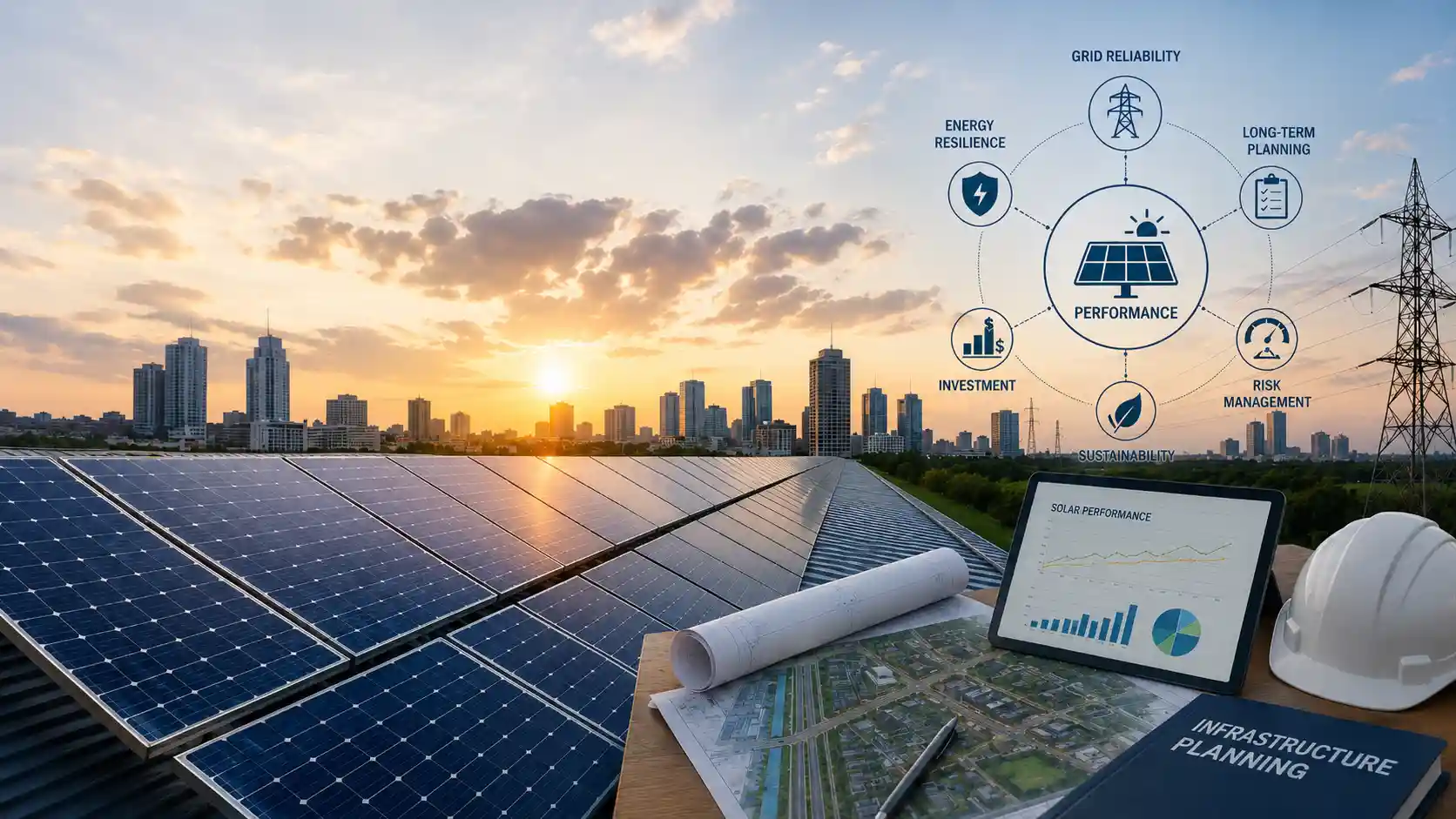
The solar industry has moved beyond simple capacity announcements. For readers tracking technology and market shifts, a practical solar panel efficiency guide helps explain why module performance is now a business signal, not just a datasheet number.
For manufacturers, distributors, EPC companies and asset owners, efficiency is no longer only a technical talking point. It affects procurement strategy, project design, logistics, land use, financial modeling and long-term competitiveness. A few percentage points on paper can become a measurable difference when multiplied across thousands of modules and years of operation.
That is why the conversation around PV modules is becoming more mature. Buyers are not simply asking which panel has the highest wattage. They are asking how reliably that output can be delivered in real field conditions.
Efficiency Has Become a Commercial Filter
In the early growth phase of solar, installed capacity was often the headline number. More megawatts meant more progress. Today, as PV becomes a mainstream energy asset, the industry is paying more attention to quality of output, not only quantity of deployment.
High-efficiency modules can help reduce balance-of-system pressure, improve output on space-limited sites and support better energy yield per square meter. This matters in commercial rooftops, floating PV projects, urban installations, industrial facilities and utility-scale plants where available surface area or land costs can shape project economics.
Efficiency is no longer just a laboratory achievement. In many PV projects, it is a practical lever for design, procurement and long-term asset value.
For buyers, the question is changing
The old question was simple: “How many watts does this panel produce?” The newer question is more useful: “How much dependable electricity can this module deliver across the life of the project, under the site conditions we actually have?”
Why Datasheets Do Not Tell the Whole Story
PV datasheets are important, but they are only the beginning of analysis. Standard test conditions make comparison possible, yet field conditions rarely look like a laboratory. Temperature, dust, humidity, shading, installation angle, inverter configuration and maintenance practices all influence real-world output.
This is where serious buyers separate marketing claims from project value. A panel with a strong headline rating may still be the wrong choice if it has weak temperature behavior, unclear warranty terms, poor documentation or limited compatibility with the intended system design.
Three numbers worth reading carefully
- Module efficiency: how much sunlight the panel can convert into usable electricity under test conditions.
- Temperature coefficient: how output changes as operating temperature rises.
- Annual degradation: how much performance may decline over time.
These numbers become especially important for large projects because small differences scale quickly. A modest efficiency advantage can influence site layout, string design, mounting requirements and expected lifetime generation.
Technology Competition Is Moving Up the Value Chain
PV manufacturing is no longer only a race to produce more panels at lower cost. The market is also competing on cell architecture, module reliability, bifacial performance, low-light response, degradation behavior and supply chain transparency.
N-type, TOPCon, HJT and other module trends
Newer module technologies are often promoted through higher efficiency and better performance characteristics. But for buyers, the most important task is not memorizing technology labels. It is understanding whether a specific product improves the economics and reliability of a specific project.
For example, a high-performance module may be valuable on a commercial roof with limited space. In another case, a slightly lower-cost module with proven field reliability and easier availability may be the better procurement decision.
The market rewards context, not hype
Every technology upgrade should be measured against project goals. Does it increase yield? Reduce installation complexity? Improve warranty confidence? Fit the inverter design? Lower lifetime cost? If the answer is unclear, the upgrade may be more of a sales claim than a project advantage.
For EPCs, Efficiency Can Change Project Design
EPC teams look at solar panels differently from casual buyers. They need modules that can be planned, installed, wired, commissioned and maintained efficiently. A small change in panel dimensions, weight, electrical characteristics or mounting requirements can affect labor, equipment handling and system architecture.
Where better modules can simplify execution
- Fewer panels may be needed to reach a target system capacity.
- Limited roof or land area can be used more effectively.
- Project layouts may become cleaner and easier to maintain.
- Higher output per module can improve the economics of constrained sites.
- Better temperature behavior can support projects in hot regions.
However, efficiency alone does not guarantee a smoother project. EPCs still need predictable supply, consistent module dimensions, clear documentation, bankable warranties and reliable technical support.
Asset Owners Are Watching Degradation More Closely
For asset owners, the first year of production is only one chapter. The larger question is how the system performs over 10, 20 or 25 years. This is why degradation rates and performance warranties have become part of the investment conversation.
A module that loses output slowly and predictably can support more stable financial modeling. A module with uncertain performance may increase risk, even if the upfront price looks attractive.
Performance warranties deserve a closer read
Buyers should not only check the length of a warranty. They should review what the warranty promises, how claims are handled, what evidence is required and whether the manufacturer or supplier is likely to support the product years later.
A lower module price can be appealing at procurement stage, but weak warranty support can become expensive during operation.
Bifacial Modules Add Opportunity — and Complexity
Bifacial solar panels are attractive because they can generate power from both sides of the module when conditions are suitable. For ground-mounted projects, carports, reflective surfaces and some commercial installations, this can add useful energy yield.
But bifacial gain is not automatic. It depends on installation height, tilt, ground reflectivity, row spacing and system modeling. Buyers should treat bifacial performance as a site-specific advantage, not a guaranteed bonus.
When bifacial PV deserves attention
- The rear side of the module receives meaningful reflected light.
- The project design allows enough spacing and height.
- The financial model uses realistic gain assumptions.
- The mounting structure does not block rear-side production.
- The site can benefit from maximizing yield within a defined footprint.
Procurement Teams Need a Better Checklist
As the solar market becomes more competitive, procurement teams need to look beyond the lowest price per watt. A stronger buying process compares the complete project impact of each module choice.
A practical module review checklist
- Efficiency and rated output
- Temperature coefficient
- Product and performance warranty
- Annual degradation assumptions
- Certifications for the target market
- Mechanical strength and weather resistance
- Supplier reliability and delivery consistency
- Compatibility with inverter and mounting design
- Availability of technical documentation
- After-sales support and warranty process
This type of review helps buyers make decisions that support both installation efficiency and long-term asset performance.
Final Perspective
Module efficiency is becoming more than a specification. It is a signal of how the PV industry is changing: from rapid deployment to smarter deployment, from simple capacity growth to long-term asset quality, from low-cost purchasing to performance-based evaluation.
For global PV buyers, the best decisions will come from balancing price, efficiency, reliability, warranty strength and field performance. The market is no longer asking only how many panels can be installed. It is asking how well those panels will perform when the project becomes a real operating asset.